By Europick Education
If you're just starting to consider studying medicine in Europe, Hungary may not be the first country that springs to mind. However, after careful consideration, it makes a lot of sense.
Earn a 6-year English-language medicine degree from established universities with long medical traditions. Once you meet the local licensing criteria, the degree is commonly accepted throughout the European Union and many other regions. Furthermore, the overall cost is typically lower than in nations such as the United Kingdom or Western Europe, yet the quality of education and hospitals remains high.
The teaching style is a combination of theory, practicals, and early clinical experience. In the first several years, you'll study basic sciences such as anatomy and physiology. Later, you progress to clinical courses and hospital rotations, when you see patients, attend ward rounds, and understand how actual medicine works.
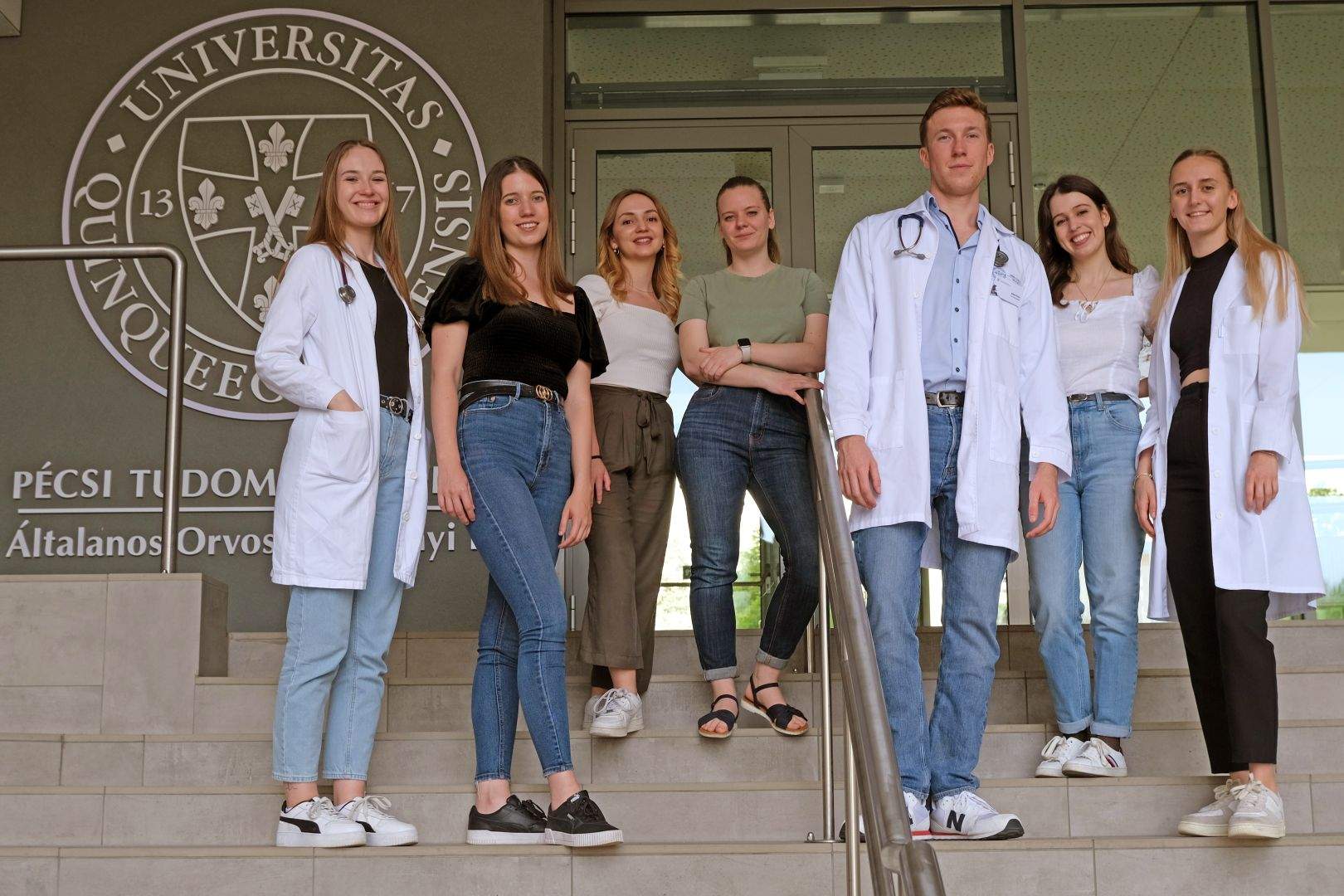
Daily living is also a significant factor in the selection. Hungary's medical universities are located in safe and student-friendly locations, and the cost of food, transportation, and lodging is lower than in other EU nations. You'll meet students from all over the world, which is beneficial if you're traveling from Asia, Africa, or the Middle East and want to feel less alone.
At Europick Education, the way we look at Hungary is simple:
-
If a scholarship works out, it’s a bonus.
-
Even without a scholarship, for many families it’s still a more realistic option than some other popular destinations.
Why Study MBBS in Hungary?
- English-taught 6-year MD program
- Globally recognized degree (EU + WHO)
- Strong practical and clinical exposure
- Modern laboratories and hospitals
- Safe and student-friendly environment
Understanding the Two Main Paths: Self‑Funded vs Scholarship
Before we go step by step, you need to be clear about the two different routes:
-
Self‑funded admission
You apply directly to the university, pay your own tuition fees, and handle your living expenses. This is the most common and reliable path. If your academics are good and you prepare well for the entrance exam, your chances are realistic. -
Scholarship‑based admission (Stipendium Hungaricum)
This is a government‑level scholarship program, not just a small university discount. If you receive it, your tuition is covered, plus you get a monthly stipend and some help with accommodation and insurance. But the competition is very high, and not every country has medicine seats available every year. Also, you must be nominated by your own country’s official partner body.
These two paths are very different in how you apply, who checks your documents, and how decisions are made. One big mistake many students make is treating Stipendium Hungaricum as “just apply and see what happens,” without planning a solid self‑funded backup. That’s risky. The smarter approach is:
-
Aim for the scholarship if you’re eligible,
-
But prepare your self‑funded application in parallel, so you don’t lose a whole year if the scholarship doesn’t come through.
Fees & Cost Overview
Without Scholarship
- Tuition Fees: €12,000 – €18,000/year
- Living Cost: €500 – €800/month
With Scholarship (Stipendium Hungaricum)
- Tuition Fees: Covered
- Monthly Stipend: €110–€150
- Accommodation: Partial support
- Medical Insurance: Covered
Important: Living cost is not fully covered, students need extra funds.
Intake & Timeline (Important)
| Stage | Time |
|---|---|
| Applications open | January |
| Deadline | May |
| Entrance exams | March – June |
| Admission result | June – July |
| Intake | September |
PART 1: Admission Process WITHOUT Scholarship
Step 1: Choose University
Select top universities:
- Semmelweis University
- University of Debrecen
Step 2: Prepare Documents
- Passport
- 10th & 12th marksheets
- Biology + Chemistry subjects
- CV (sometimes required)
- Motivation letter
Step 3: Apply Online
- Fill university application form
- Pay application fee (~€100–€200)
Step 4: Entrance Exam
Subjects:
- Biology
- Chemistry or Physics
Format:
- Written test (MCQ)
- Oral interview
Step 5: Interview
- Basic science knowledge
- Communication skills
- Motivation for medicine
Step 6: Offer Letter
- Conditional / final admission
Step 7: Fee Payment
- Pay first semester fee
Step 8: Visa Process
- Apply for Hungary student visa
- Show financial proof
Step 9: Travel & Enrollment
- Reach Hungary
- Start classes
PART 2: Admission Process WITH Scholarship
Scholarship Route (Stipendium Hungaricum) – Step‑by‑Step
Now let’s talk about the scholarship path, which is very attractive but often misunderstood.
Step 1: Check If You Are Even Eligible
You don’t start by filling forms. You start by checking:
-
Is your country part of the Stipendium Hungaricum partner list?
-
Is Medicine (General Medicine) actually offered under this scholarship for your country this year?
-
Which universities are available for this specific program?
If the answer to any of these is “no,” then you cannot use this scholarship for MBBS, and you should not waste time on it. Focus on self‑funded applications instead.
Step 2: Understand the Two‑Layer System
Stipendium Hungaricum has two main sides:
-
Hungarian side – the online system where you apply and where universities later review your file.
-
Your own country’s side – a “sending partner” (like a Ministry or national agency) that must nominate you.
If your country does not nominate you, Hungary will not even look at your file. Many students ignore this and think “I applied online, so I’m in the race.” They aren’t.
Step 3: Prepare Documents and Apply on the Scholarship Portal
On the official scholarship portal, you:
-
Create an account
-
Fill in your personal and academic details
-
Select study level (one‑tier master / medicine)
-
Choose your preferred universities
-
Upload your academic documents, motivation letter, and other required files
Treat this like a serious university application, not a casual form. Your motivation letter matters a lot here because the authorities want to see that you have a clear reason for choosing medicine and Hungary.
Step 4: Apply Through Your Country’s Sending Partner
Parallel to the online application, you must follow the instructions from your sending partner. This may mean:
-
Filling an extra form
-
Submitting hard copies
-
Sitting for a small local screening
-
Meeting an earlier deadline than Hungary’s
If you miss your sending partner’s process, your application will not be nominated, even if your scholarship profile is perfect.
Step 5: Wait for Nomination and Then University Evaluation
If your country decides to nominate you, your application moves to the Hungarian side. Only then do universities start to see your file.
They will then invite you for:
-
Their entrance exam
-
Their interview
This part is very similar to the self‑funded route. You still need to pass academically. The difference is that now, instead of just getting a place, you are competing for a funded place.
Step 6: Final Scholarship Decision
After the exams and evaluations, one of several things can happen:
-
You are offered a scholarship place
-
You are offered a self‑funded place (no scholarship, but you can still join by paying fees)
-
You are put on a waiting list
-
You are rejected
If you get the scholarship, your tuition is covered, you receive a monthly stipend, and some accommodation/insurance support. But you should still expect to cover part of your living costs yourself. If you are offered only a self‑funded place, you decide whether your family can handle the cost and then proceed like a normal self‑funded student.
Step 7: Final Selection
- Hungary government + university decision
Step 8: Scholarship Award
- Tuition free
- Stipend
- Accommodation support
Step 9: Visa & Travel
departure
Common Mistakes – And How to Avoid Them
Here are some mistakes we see again and again:
-
Relying only on scholarship and doing nothing about self‑funded applications
-
Ignoring the sending partner and applying only on the Hungarian portal
-
Underestimating the entrance exam and not revising biology and chemistry properly
-
Leaving documents and translations to the last minute
-
Not checking deadlines and assuming there will be second chances
The safest path is always:
-
Plan early
-
Keep your self‑funded path strong
-
Treat the scholarship as a bonus, not the only hope
How Europick Education Fits Into This Journey
If this all feels like a lot, that’s normal. The process has many small steps, and it’s easy to lose track if you’re doing it alone.
What we do at Europick Education is break it down into a clear sequence:
-
Understand your background, marks, budget, and long‑term goals
-
Help you choose the right Hungarian universities for your situation
-
Make a document checklist and timeline
-
Guide you through the university application and entrance exam preparation
-
If relevant, help you decide whether the scholarship route is realistic in your case
-
Support you during offer handling, fee payment, and visa process
-
Provide pre‑departure guidance so you’re not surprised when you land in Hungary
The idea is simple:
You bring your effort and commitment, we bring the structure and experience.
Zero knowledge → Successful MBBS admission
Final Advice
Hungary is a great option for quality education, but:
- Scholarship → Very competitive
- Self-funded → Best and reliable option