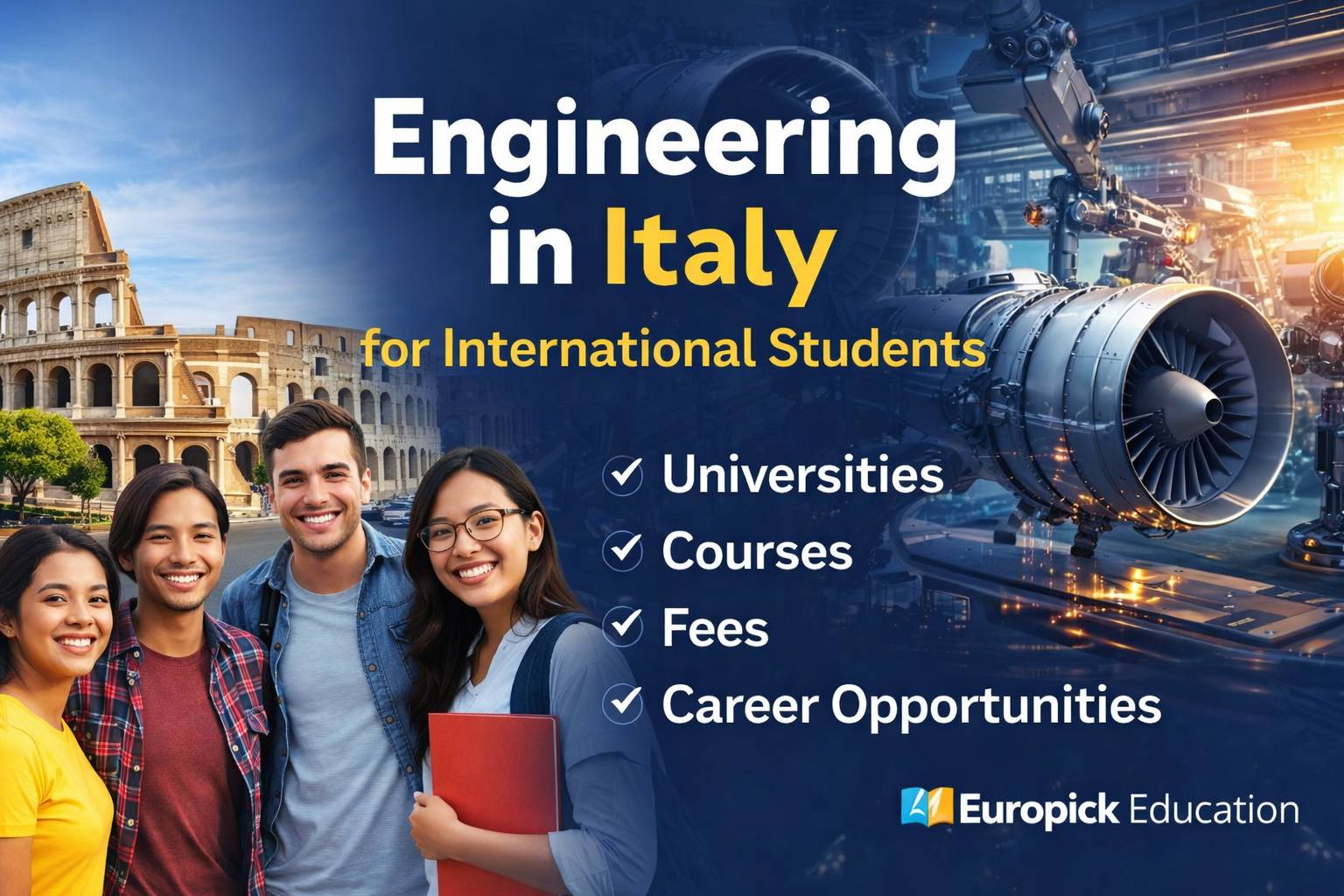
Engineering in Italy for International Students – Universities, Courses, Costs and Career Opportunities
Italy has become an increasingly popular destination for international students who want to pursue engineering education in Europe. Known for its rich history of innovation, strong industrial sectors, and globally recognized universities, Italy offers a wide range of engineering programs for students from around the world.
International students often choose Italy not only because of the academic quality but also because of the opportunity to experience European culture, advanced research facilities, and international career pathways. Engineering programs in Italy are designed to combine theoretical knowledge with practical skills, helping students prepare for modern technological industries.
This guide provides a detailed overview of engineering education in Italy for international students, including universities, admission processes, course structures, costs, living expenses, and potential career opportunities after graduation.
Why Study Engineering in Italy?
Italy has a long tradition of scientific innovation and engineering excellence. From automotive engineering and aerospace technologies to architecture and industrial design, Italy has contributed significantly to technological advancements across many industries.
Several Italian universities are recognized internationally for engineering and technical education. Many institutions collaborate with global industries, research organizations, and European innovation programs, providing students with exposure to real-world engineering environments.
Another reason international students consider Italy is the availability of English-taught engineering programs, especially at the master's level. These programs allow students from different countries to study without needing advanced Italian language skills during the initial stages.
Top Engineering Universities in Italy
Italy is home to many universities that offer high-quality engineering programs. Some institutions are well known for their research output, academic reputation, and collaborations with international industries.
While rankings may change over time, several universities are frequently recognized for engineering and technology education.
| University | City | Popular Engineering Fields |
| Politecnico di Milano | Milan | Mechanical, Civil, Aerospace, Architecture |
| Politecnico di Torino | Turin | Automotive, Mechanical, Electrical |
| University of Bologna | Bologna | Computer Science, Energy Engineering |
| Sapienza University of Rome | Rome | Electrical, Civil, Aerospace |
| University of Padua | Padua | Information Engineering, Robotics |
Popular Engineering Courses in Italy
Engineering programs in Italy cover a wide range of specializations, allowing students to focus on specific areas of technology and innovation. The choice of specialization depends on students' academic interests and long-term career goals.
Some of the most popular engineering disciplines include mechanical engineering, civil engineering, computer engineering, electrical engineering, and aerospace engineering. These programs often include laboratory work, research projects, and internships with industry partners.
Mechanical Engineering
Mechanical engineering focuses on machines, manufacturing systems, energy technologies, and industrial design. Italy’s strong automotive and manufacturing industries make this field particularly relevant.
Computer Engineering
Computer engineering programs cover software systems, artificial intelligence, data science, and computer networks. With the rapid growth of digital technologies, graduates in this field often find opportunities in global technology companies.
Civil Engineering
Civil engineering focuses on infrastructure development including bridges, roads, buildings, and urban planning. Italian universities often combine modern engineering techniques with sustainable design approaches.
Aerospace Engineering
Aerospace engineering programs involve aircraft design, space technologies, and aerodynamics. Italy has several research institutes and collaborations within the European aerospace industry.
Admission Requirements for Engineering Programs
Admission requirements for engineering programs in Italy vary depending on the university and level of study. Generally, universities evaluate academic qualifications, language proficiency, and sometimes entrance examinations.
For undergraduate engineering programs, students typically need a secondary school qualification equivalent to Italian high school standards. Some universities may require entrance tests or aptitude assessments.
For master's programs, applicants usually need a bachelor's degree in a related field along with supporting documents such as transcripts, academic certificates, and motivation letters.
Language Requirements
Many engineering programs in Italy are offered in English, particularly at the master's level. Students may need to provide proof of English language proficiency through standardized tests such as IELTS or TOEFL depending on university requirements.
Although courses may be taught in English, learning basic Italian can still be helpful for daily life, internships, and communication outside the classroom.
Cost of Studying Engineering in Italy
The cost of studying engineering in Italy depends on the university, program level, and individual circumstances. Public universities generally have lower tuition fees compared to private institutions in other countries.
Tuition fees can vary widely depending on factors such as income-based fee structures and available financial aid programs. Students are encouraged to check the official websites of universities for updated fee information.
Approximate Tuition Fees
| Program Level | Approximate Annual Fees |
| Bachelor's Degree | €900 – €4000 |
| Master's Degree | €1000 – €5000 |
These figures are approximate and may change depending on the university and financial conditions.
Cost of Living for Engineering Students
Living expenses depend on the city where students study. Large cities such as Milan and Rome may have higher accommodation costs compared to smaller university towns.
Students typically spend money on accommodation, food, transportation, health insurance, and study materials. Sharing apartments or living in student residences can help reduce expenses.
Approximate Monthly Living Costs
| Expense | Estimated Monthly Cost |
| Accommodation | €300 – €700 |
| Food | €150 – €300 |
| Transport | €30 – €80 |
| Other Expenses | €100 – €200 |
Scholarships for Engineering Students
Many international students explore scholarship opportunities to help reduce education costs. Italian universities and regional authorities offer financial assistance programs that may support eligible students.
Scholarships may cover partial tuition fees, accommodation support, or living allowances depending on eligibility criteria and funding availability.
Students should carefully review official scholarship programs and application deadlines when planning their studies in Italy.
Student Life for Engineering Students in Italy
Engineering students in Italy experience a vibrant academic and social environment. Universities often organize workshops, technical competitions, innovation labs, and student associations that encourage collaboration and creativity.
Italy’s cultural heritage, historic cities, and diverse cuisine also make the student experience enjoyable outside academic life. Many students travel across Europe during holidays and weekends, exploring different cultures and landscapes.
Internships and Industry Collaboration
Engineering education in Italy often includes practical training opportunities. Many universities collaborate with industries and research institutions to provide internships and project-based learning.
These experiences allow students to apply theoretical knowledge in real-world engineering environments and build professional networks before graduation.
Career Opportunities After Engineering in Italy
Engineering graduates from Italian universities may explore career opportunities in various industries such as manufacturing, automotive technology, renewable energy, information technology, and construction.
Some students continue their academic journey through research programs or doctoral studies, while others enter industry roles or multinational companies.
Career pathways depend on individual specialization, skills, and professional experience gained during university education.
Summarise
Studying engineering in Italy can offer international students a valuable combination of academic excellence, cultural exposure, and global career opportunities. Italian universities provide diverse engineering programs supported by research infrastructure and industry collaboration.
Students considering engineering education in Italy should carefully research universities, admission requirements, costs, and career pathways before making decisions. With proper planning and dedication, engineering education in Italy can become a rewarding academic journey.
Frequently Asked Questions
Is Italy good for engineering studies?
Italy has several internationally recognized universities offering engineering programs with strong research and industry collaborations.
Are engineering programs in Italy taught in English?
Many master's level engineering programs are available in English, while some undergraduate programs may be offered in Italian.
How much does engineering cost in Italy?
Tuition fees vary depending on the university and program, but public universities generally have relatively affordable fee structures compared to many other countries.
Can international students work while studying in Italy?
International students may be allowed to work part-time according to local regulations, which can help support living expenses during their studies.