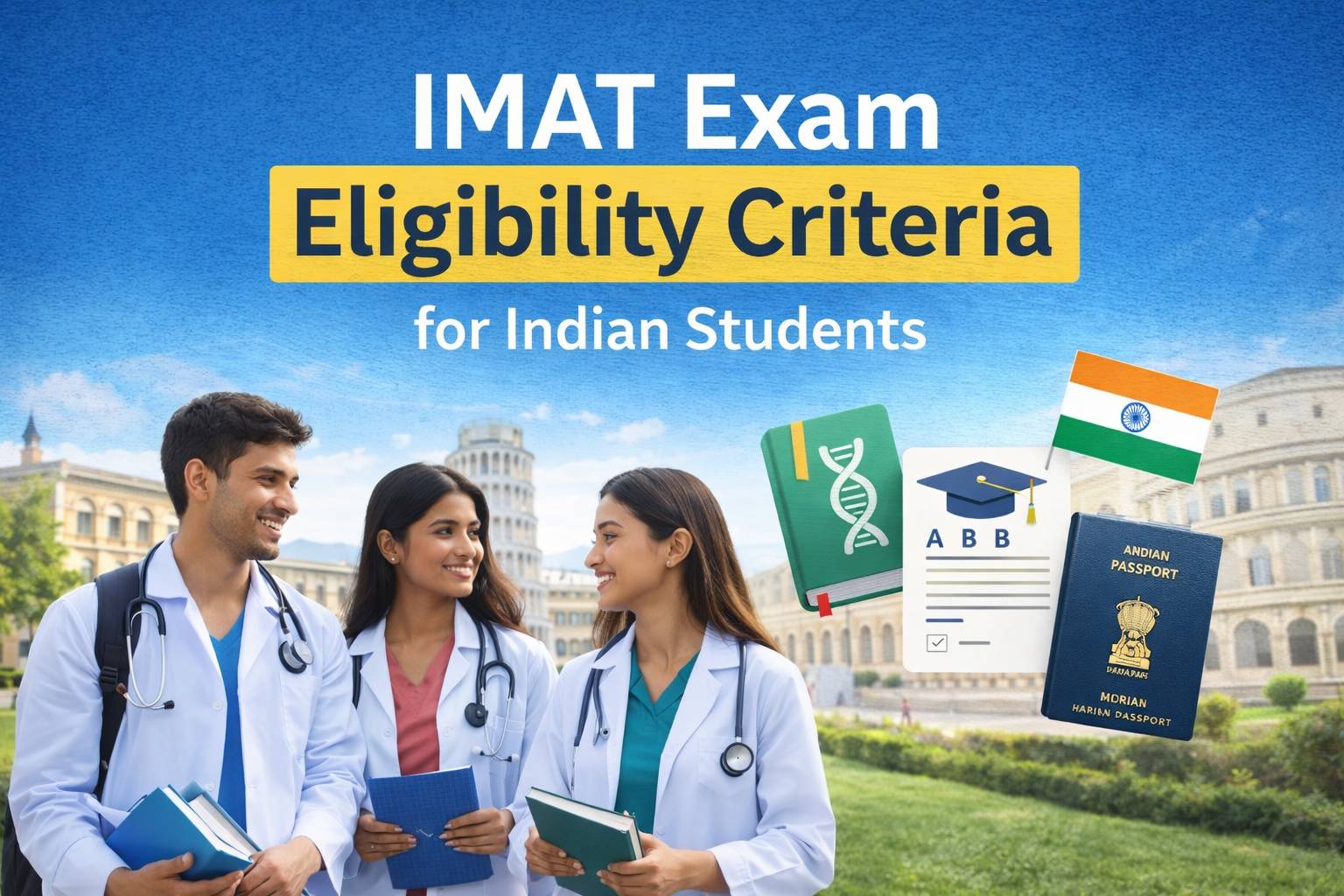
IMAT Exam Eligibility Criteria for Indian Students
The International Medical Admission Test (IMAT) is an entrance examination required for admission to English-taught medical programs offered by public universities in Italy. Every year, thousands of international students take the IMAT exam in order to pursue medical education in Italian universities.
Indian students have increasingly shown interest in studying medicine in Italy because the country offers internationally recognized medical degrees, modern universities, and comparatively affordable tuition fees. However, before preparing for the exam, students must first understand the eligibility criteria required to apply for the IMAT exam.
Eligibility requirements may vary slightly depending on the university and official regulations announced for a specific academic year. Therefore, the information provided in this guide should be considered general guidance based on commonly followed admission rules.
What Is the IMAT Exam?
The IMAT exam is an entrance test used by Italian public universities to select students for English-taught medical programs. The exam evaluates students in areas such as logical reasoning, general knowledge, biology, chemistry, physics, and mathematics.
Students who achieve competitive scores in the IMAT exam can apply to medical programs offered by participating universities in Italy. Admission is usually based on ranking lists created according to exam scores.
Basic Eligibility Criteria for Indian Students
Indian students interested in appearing for the IMAT exam must generally satisfy certain academic requirements before applying. These requirements are mainly related to educational background and completion of secondary school education.
Although exact conditions may vary slightly depending on official announcements, most students who have completed their higher secondary education with science subjects are eligible to apply.
Completion of Higher Secondary Education
Students are generally required to complete higher secondary education or its equivalent before applying for admission to medical programs. For Indian students, this usually means completing Class 12 from a recognized board such as CBSE, ISC, or a state board.
The subjects studied during higher secondary education should normally include science subjects that are relevant for medical studies.
Required Science Subjects
Students are usually expected to have studied science subjects during their higher secondary education. These subjects often include:
Biology
Chemistry
Physics
These subjects provide the foundational knowledge necessary for medical education and are therefore commonly required for admission to medical programs.
Minimum Academic Performance
Some universities may require students to meet minimum academic performance standards in their higher secondary examinations. These standards may vary depending on university guidelines and admission regulations.
Because admission through the IMAT exam is competitive, students with strong academic performance in science subjects may have better chances of securing admission.
Age Requirements
Students are generally expected to have completed secondary school education before beginning a medical program in Italy. Most students taking the IMAT exam are typically around 17 to 19 years old at the time of application, although exact age requirements may depend on official admission policies.
Students should ensure that they meet any age-related requirements specified in official announcements before applying.
Language Requirements
Medical programs offered through the IMAT exam are taught entirely in English. Because of this, students must have sufficient proficiency in English to understand lectures, textbooks, and examinations.
Some universities may request proof of English language proficiency, while others may accept previous education in English as evidence of language ability. Students should verify the specific language requirements for the universities they plan to apply to.
Eligibility to Appear for the IMAT Exam
Indian students can usually appear for the IMAT exam regardless of their nationality as long as they meet the academic requirements and complete the official registration process.
The exam is conducted at authorized testing centers located in multiple countries. This allows students from different regions to take the exam closer to their location.
During registration, students must select a preferred testing center and complete the required payment for the exam fee.
Documents Typically Required for Application
Students applying for medical programs in Italy may be asked to submit certain documents during the admission process. These documents help universities verify the student's academic qualifications.
Commonly requested documents may include:
Higher secondary school certificates
Academic transcripts
Passport identification
Proof of English proficiency (if required)
Other documents requested by universities
Students should carefully review official university guidelines to ensure they prepare the necessary documents in advance.
Importance of Checking Official Guidelines
Admission regulations and eligibility criteria may change slightly from year to year depending on university policies and government regulations. Because of this, students should always confirm the latest eligibility requirements through official university announcements or authorized information sources.
Relying only on outdated information may lead to confusion or incorrect assumptions about eligibility requirements.
Preparing for the IMAT Exam
Meeting the eligibility requirements is only the first step for students who want to study medicine in Italy. Because the IMAT exam is competitive, students are encouraged to begin preparation early and focus on understanding the exam pattern and syllabus.
Students usually spend several months preparing for the exam by reviewing science subjects, practicing logical reasoning questions, and taking mock tests.
Consistent preparation can improve a student's chances of achieving a competitive score in the exam.
Advantages for Indian Students
Indian students often find studying medicine in Italy attractive because it offers a combination of high-quality education, global recognition, and relatively affordable tuition fees compared to some other countries.
Many Italian universities also provide diverse international environments where students from different cultural backgrounds study together. This international exposure can enhance both academic and personal development.
Summarise
The IMAT exam provides Indian students with an opportunity to pursue medical education in internationally recognized universities in Italy. Understanding the eligibility criteria is an important first step before beginning the preparation process.
While the exact requirements may vary depending on official announcements, most students who have completed higher secondary education with science subjects can explore this pathway to medical education in Italy.
Students are always encouraged to verify the latest admission guidelines from official university sources before applying for the IMAT exam.
Frequently Asked Questions
Can Indian students apply for the IMAT exam?
Yes, Indian students who meet the required academic qualifications can apply for the IMAT exam and pursue medical education in Italian universities.
Do Indian students need NEET for IMAT?
Some Indian students may need to consider national regulations related to studying medicine abroad. Students should verify the latest guidelines from relevant authorities.
Is IMAT conducted in India?
IMAT exam centers may be available in several countries. Students should check the official registration portal to see the available testing centers for a particular year.
What subjects are required for IMAT eligibility?
Students usually need to have studied science subjects such as biology, chemistry, and physics during higher secondary education.
Is English proficiency required for studying medicine in Italy?
Since the medical programs are taught in English, students must have sufficient English language proficiency to understand academic coursework.